Pamukkale Travertines!
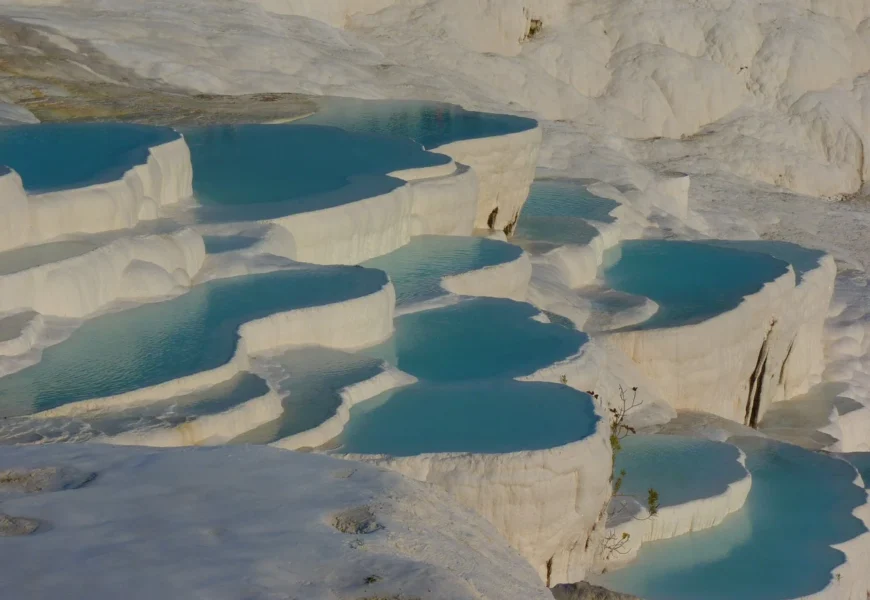
With their otherworldly appearance, Pamukkale Travertines are among the most enchanting natural wonders. This natural beauty, which fascinates everyone who sees it, is one of the most impressive details patiently crafted by nature.
With its visual richness and historical texture, it attracts both foreign and domestic tourists every year.
Where is Pamukkale Travertines?
Pamukkale Travertines location information
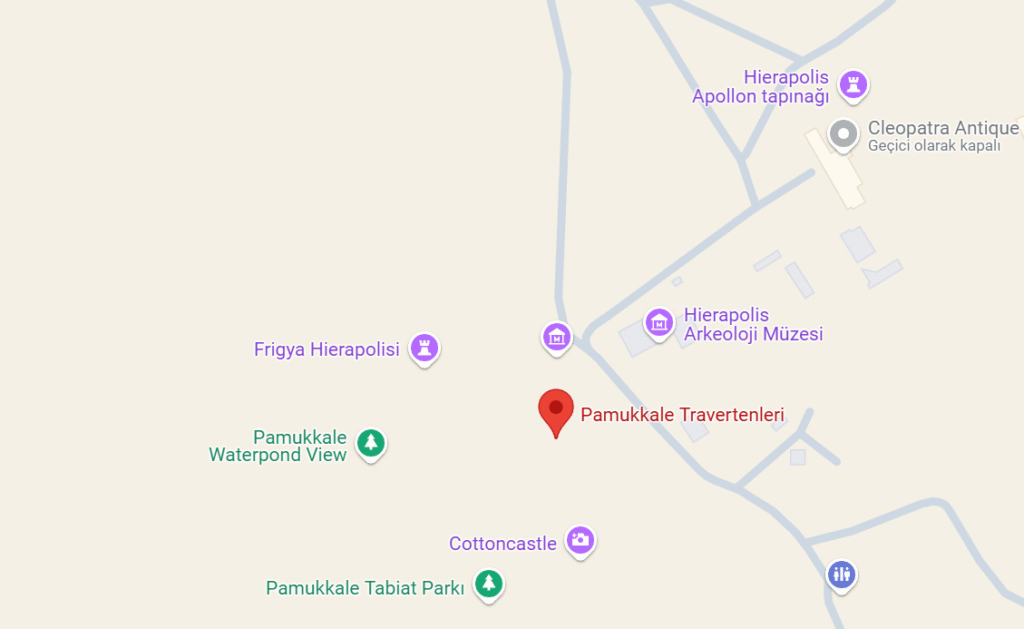
Where is Pamukkale Travertines Pamukkale Travertines
How Were the Pamukkale Travertines Formed?
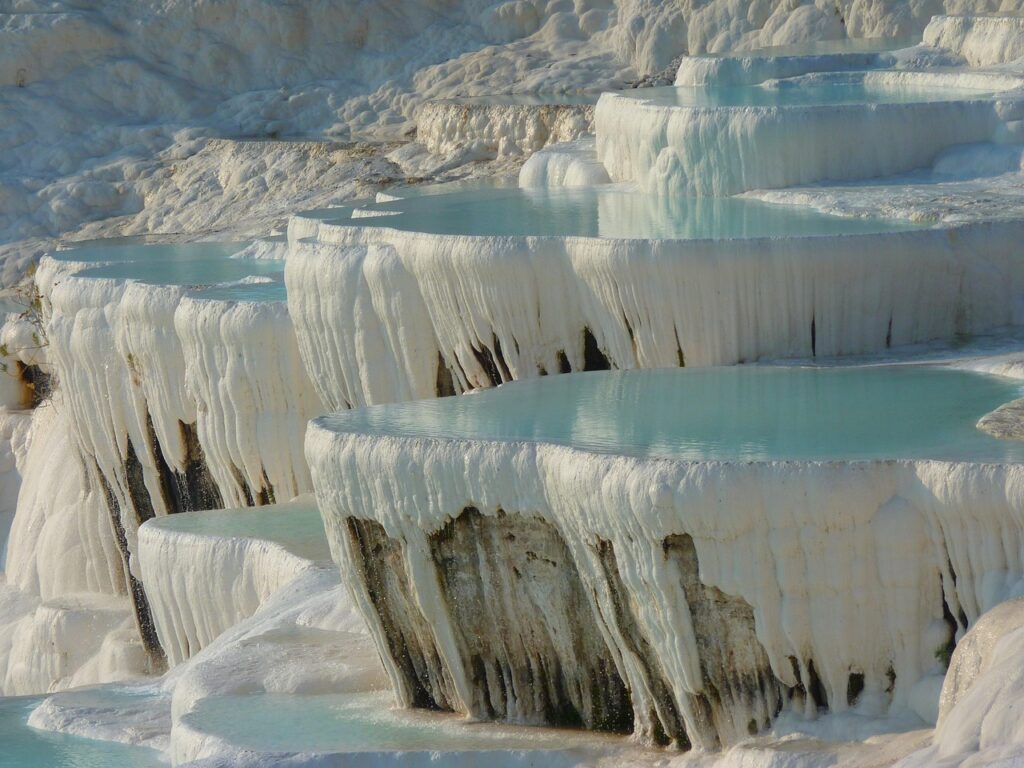
How Were the Formed?
The Pamukkale travertines were formed when hot water springs surfaced and the high amount of calcium carbonate in the water precipitated.
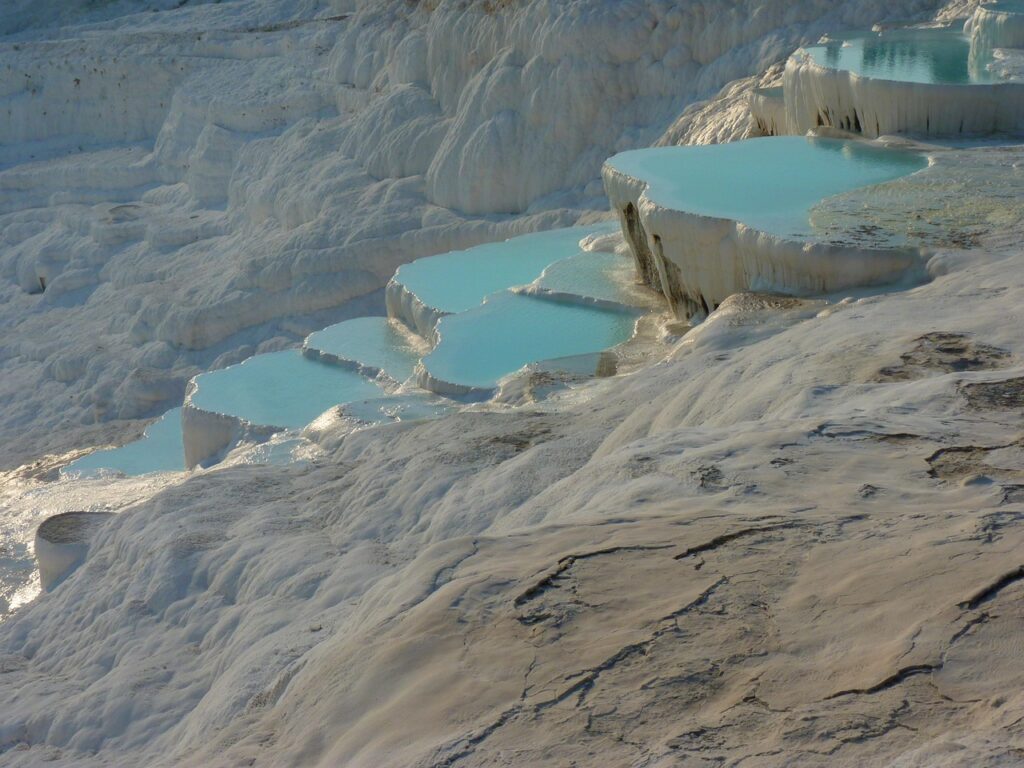
As the hot water reaches the surface, it rapidly cools down, and the calcium carbonate initially forms a gel. Over time, this gel hardens and forms the white travertines. When examining pictures of the Pamukkale travertines, it can be observed that the upper layers are softer while the lower layers are more solid.
This place, which showcases nature’s unique beauty, attracts a large number of tourists, especially in the summer months.
As one of the best holiday destinations, Pamukkale also catches the eye of photography enthusiasts with its natural charm. It is listed as a UNESCO World Heritage Site.
Information About Pamukkale Travertines
Detailed information about Pamukkale Travertines, which are on the UNESCO World Heritage list, is provided below:
- The water temperature ranges between approximately 35°C and 100°C.
- There are no restrictions on entering the travertines barefoot.
- This is done both to protect the travertines and to allow visitors to truly feel the natural structure.
- The travertines are not only visually stunning but also known for their healing thermal waters. These healing thermal waters draw numerous visitors to the region year-round.
Which City Are the Pamukkale Travertines In?
Where is Pamukkale located?
Pamukkale Travertines are located within the provincial borders of Denizli, in Turkey’s Aegean Region. About 20 kilometers from the city center, this site is well-known for its therapeutic waters that complement the travertines.
Features of the Pamukkale Travertines
The characteristics of Pamukkale Travertines, known for their dazzling white appearance and sparkle under sunlight, are listed below…
- Each travertine has a shiny, radiant, and white appearance.
- The pools in the travertines have waters resembling blue and green tones.
- Each travertine features tiered small pools filled with mineral-rich thermal water.
- These waters are known to help with skin conditions, rheumatism, and muscle spasms.
Pamukkale can be visited year-round, but visits in the spring and autumn are particularly enjoyable and productive.
Places to Visit in Pamukkale
Places to Visit in Pamukkale
There are many natural wonders and historical sites around Pamukkale Travertines worth exploring:
Hierapolis Ancient City
This city from the Roman era is located just above the Pamukkale travertines. With its agora, theatre, and ancient roads, it’s ideal for those wishing to trace historical footsteps.
Antique Pool (Cleopatra’s Pool)
The Antique Pool, also known as Cleopatra’s Pool, is said to be the place where Cleopatra herself once swam. Filled with hot spring water, this pool offers a unique experience among the remnants of ancient columns.
Laodicea Ancient City
Located about 10 kilometers from Pamukkale, this city was highly popular during the Roman Empire. It once served as a religious center and trade hub and now offers visitors a breathtaking setting for memorable photographs.
Pamukkale Natural Park
Situated just below the travertines, this park is ideal for sitting around the pond, enjoying the view, or going for a pleasant walk.
Karahayıt Thermal Springs
Drawing attention with its red-colored thermal water, Karahayıt Thermal Springs are located very close to Pamukkale. With its healing properties, it holds significant value for health tourism.
CHECK OUT THIS TOO👇

Cyprus Hotels! What is the best part of Cyprus to stay in?
Frequently Asked Questions Pamukkale Travertines
Is Pamukkale One of the Wonders of the World?
Pamukkale has been recognized as a UNESCO World Heritage Site since 1988. While not officially one of the Seven Wonders of the World, it is often referred to as the eighth wonder by locals and admirers. Beloved by the Turkish people and hosting countless visitors each year, Pamukkale is famous for its white stalactites and terraced calcium formations.
Can You Swim in Pamukkale?
The waters of the Pamukkale travertines are believed to be therapeutic. Therefore, swimming in the morning can provide various health benefits. Although Pamukkale is not very popular in winter, it sees a high number of visitors during the spring months.
The best time for swimming is before noon. While swimming is enjoyable at any time of day, being in the cool waters in the morning is especially recommended to boost your body’s resilience.